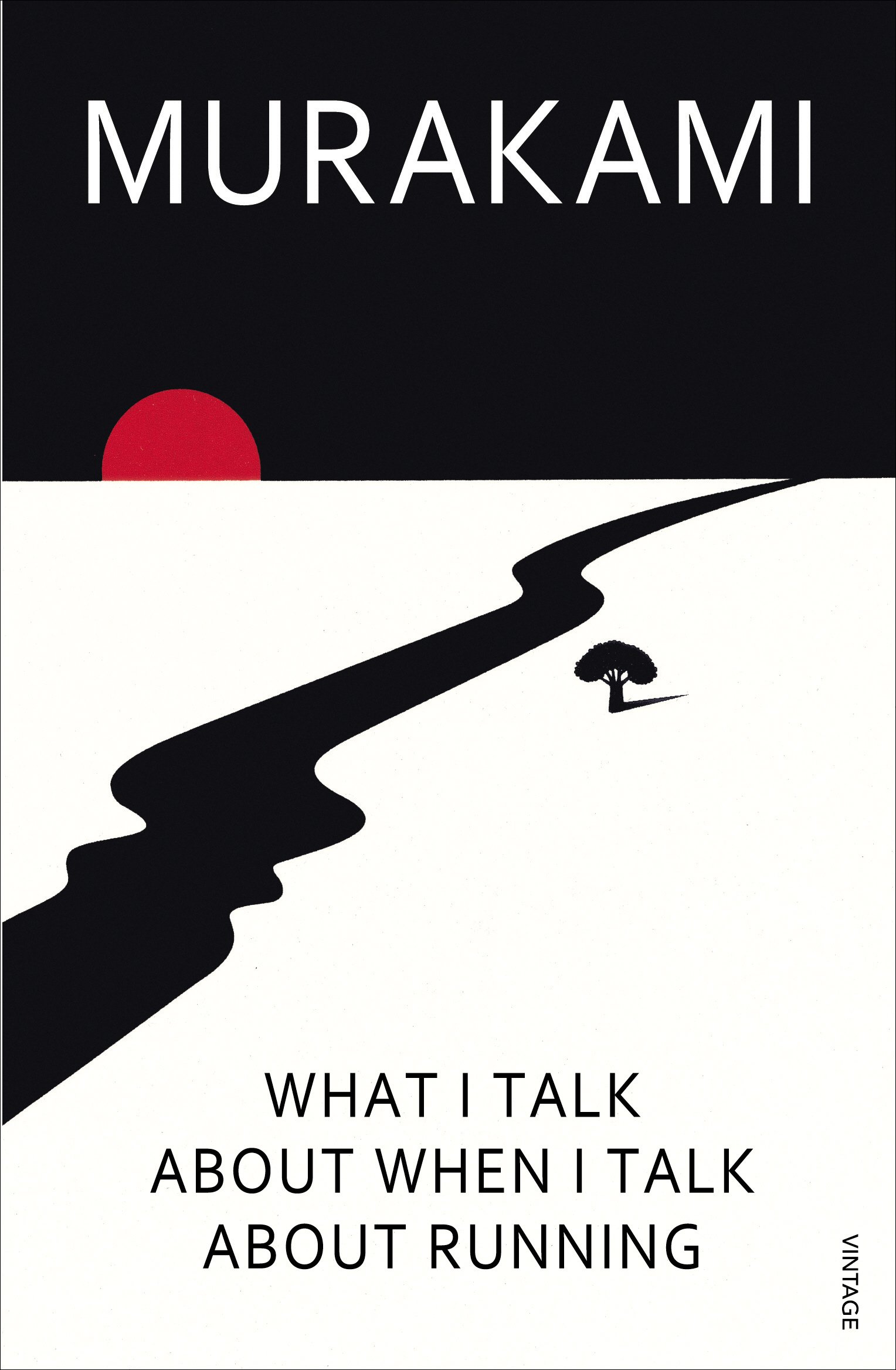
a goodsread 4/5 sums it up well
I'm a bit baffled by how anyone who's not a distance runner could possibly be interested in this book, but I personally got a lot out of it. This is in spite of the fact that I'm not a Murakami girl, and honestly didn't enjoy the style of this book at all. I always feel when I'm reading him that I've somehow wound up with a crappy translation, but then I realize that I'm reading the same version as all the English-only Murakami lovers out there, so apparently I just don't like the way he writes. Still, I did enjoy this book, and I've given it four stars because I've found since finishing that it's really helped me with my own running. Now when I'm out there pounding the pavement, I think of Murakami and some things he wrote about, and it keeps me going. That's just what I'm after with these exercise books!
this one of those annoying pdfs. after finish reading and digesting and rating and allat i wanna align all the text
Perhaps I’m just too painstaking a type of person, but I can’t grasp much of anything without putting down my thoughts in writing, so I had to actually get my hands working and write these words. Otherwise, I’d never know what running means to me.
Once you set the pace, the rest will follow. The problem is getting the flywheel to spin at a set speed—and to get to that point takes as much concentration and effort as you can manage.
Generally, unless some great change takes place, rivers always look about the same. The Charles River, in particular, looked totally unchanged. Time had passed, students had come and gone, I’d aged ten years, and there’d literally been a lot of water under the bridge. But the river has remained unaltered. The water still flows swiftly and silently toward Boston Harbor. It soaks the shoreline, making the summer grasses grow thick, which help feed the waterfowl. It flows languidly, ceaselessly, under the old bridges, reflecting clouds in summer and bobbing with floes in winter—silently heading toward the ocean.
I just run. I run in a void. Or maybe I should put it the other way: I run in order to acquire a void. But as you might expect, an occasional thought will slip into this void. People’s minds can’t be a complete blank. Human beings’ emotions are not strong or consistent enough to sustain a vacuum. What I mean is, the kinds of thoughts and ideas that invade my emotions as I run remain subordinate to that void. Lacking content, they are just random thoughts that gather around that central void.
What this might mean for me, now that I’m in my late fifties, I don’t know yet. But I think it’s got to mean something. Maybe not anything profound, but there must be significance to it.
yeah ok we are bringing up springs. one trick pony
Some people are suited more for marathon running, some for golf, others for gambling.
last one so real
If I can’t manage this much, I think, it’ll serve me right.
It’s pretty thin, the wall separating healthy confidence and unhealthy pride.
At around twenty-three miles, I start to hate everything. Enough already! My energy has scraped bottom, and I don’t want to run anymore. I feel like I’m driving a car on empty. I need a drink, but if I stopped here to drink some water, I don’t think I could get running again. I’m dying of thirst but lack the strength to even drink water anymore. As these thoughts flit through my mind, I gradually start to get angry. Angry at the sheep happily munching grass in an empty lot next to the road. Angry at the photographer snapping photos from inside the van. The sound of the shutter grates on my nerves. Who needs this many sheep, anyway? But snapping the shutter is the photographer’s job, just as chewing grass is the sheep’s, so I don’t have any right to complain.
I remember two young runners in particular, Taniguchi and Kanei. They were both in their late twenties, both former members of the Waseda University track team, where they’d been standouts in the Hakone relay race. After Seko was named manager of the S&B team, they were expected to be the two young stars of the team. They were the caliber of runner expected to win medals at the Olympics someday, and hard training didn’t faze them. Sadly, though, they were killed in a car accident when the team was training together in Hokkaido in the summer. I’d seen with my own eyes the tough regimen they’d put themselves through, and it was a real shock when I heard the news of their deaths. It hurt me to hear this, and I felt it was a terrible waste.
We’d hardly ever spoken, and I didn’t know them personally that well. I only learned after their deaths that they had both just gotten married. Still, as a fellow long-distance runner who’d encountered them day after day, I felt like we somehow understood each other. Even if the skill level varies, there are things that only runners understand and share. I truly believe that.
Even now, when I run along Jingu Gaien or Asakasa Gosho, sometimes I remember these other runners. I’ll round a corner and feel like I should see them coming toward me, silently running, their breath white in the morning air. And I always think this: They put up with such strenuous training, and where did their thoughts, their hopes and dreams, disappear to? When people pass away, do their thoughts just vanish?
They don’t control the traffic along the course, but since there aren’t many cars and people to begin with, there really isn’t a need to. Beside the road cows are lazily chewing grass. They show zero interest in the runners. They’re too busy eating grass to care about all these whimsical people and their nonsensical activities.
all this mf can do is reject closure
I expect that this winter I’ll run another marathon somewhere in the world. And I’m sure come next summer I’ll be out in another triathlon somewhere, giving it my best shot. Thus the seasons come and go, and the years pass by. I’ll age one more year, and probably finish another novel. One by one, I’ll face the tasks before me and complete them as best I can. Focusing on each stride forward, but at the same time taking a long-range view, scanning the scenery as far ahead as I can. I am, after all, a long-distance runner.
In the 1980s I used to jog every morning in Tokyo and often passed a very attractive young woman. We passed each other jogging for several years and got to recognize each other by sight and smile a greeting each time we passed. I never spoke to her (I’m too shy), and of course don’t even know her name. But seeing her face every morning as I ran was one of life’s small pleasures. Without pleasures like that, it’s pretty hard to get up and go jogging every morning.